
tarot
The Tarot is a philosophical system aimed at developing consciousness and finding balance.
 transformative power
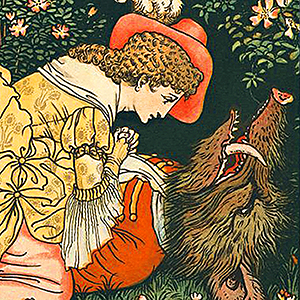
Discover the transformative power of the Tarot. For centuries now, her intriguing images have formed an endless source of inspiration for thinkers, seekers, artists and philosophers in learning to look beyond the familiar and penetrate down to the deeper layers of existence. But also in our modern world, they form a practical and effective system for gaining greater insight into humans in general and ourselves in particular.
old wisdom and new consciousness
Archetypes, myths and symbols are deeply anchored in the roots of our collective history. (Mythical) stories and images are used to pass on knowledge and experience from time immemorial. These are condensed pieces of information that, if we give them our attention, can be rich sources of insight. Connecting with archetypes often feels deeply familiar, and opens up new ways of looking at the reality of everyday life.
of their deeper self, they become
authentic and able to act with true
originality, for the deep self is secretly
connected to the origins of life
The first descriptions of the Tarot in the form of a card game date back to the early 14th century. Recent anthropological research, however, shows that many of the themes, symbols and archetypes depicted on the cards are older than language itself. This puts at our disposal the condensed knowledge of centuries of human experience.
Philosopher of science Ervin László puts it like this: "We as individuals are not immortal, but our experience is. The traces of everything we have ever experienced persist, and they can be forever recalled."
neurological research
Neurological research has shown that our subconscious speaks the language of symbols and images - such as those in dreams - and does not read or recognize words.
Because our conscious mind recognizes both, a powerful symbiosis is formed between word (explanation) and image (archetype). In this way, the images of the Tarot can provide greater insight into the human experience at the material, emotional, intellectual, and spiritual levels, and form a navigation system for the road map of life. It is remarkable to see how, in this way, people are able to get in touch with what they already know deep inside.
 jung and archetypes
Swiss psychiatrist and psychologist Carl Gustav Jung (1875 - 1961) was a pioneer in the area of research into the unconscious and the founder of analytical psychology. He examined the dynamics of the human spirit in all its facets and, alongside a scientific approach, also employed philosophy, mythology, art, religion, and self-examination.
He held that in addition to our own personal (un)consciousness, that develops through our own experience, we are also shaped for a large part by what he called 'the collective unconscious'. An area where humanity's unconscious universal patterns of thoughts and emotions are stored. In other words, whether we are conscious of it or not, we are all part of the collective and affected by it. He called the patterns he discovered in this field 'archetypes'. Archetypes show possibilities or tendencies we have for developing in a certain way. They express themselves in images and symbols that can also be found in our dreams, fairy tales, and myths, and they are often described in world religions.
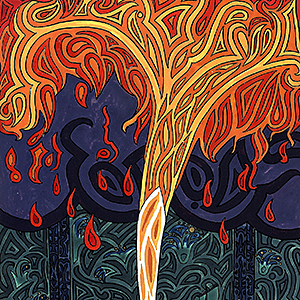
Jung considered an archetype to be a 'bridge' between the unconscious (and the collective unconscious) and the conscious mind. An aid in bringing the knowledge stored in our subconscious to the surface and integrating it into our consciousness. According to Jung, by studying archetypes we can get to know ourselves better because we recognize in them our own hopes, aspirations, and fears. Image: detail of a page from “The Red Book” by Carl Gustav Jung.
tarot consultancy
In addition to individual coaching sessions, workshops and courses for private individuals I offer courses and team coaching for professionals (including leadership training). In these (group)sessions, research is done with the help of archetypes to reveal unseen aspects and possibilities and with a fresh look at things new perspectives will emerge.
view all services for personal and professional development >>